
Placenta Injection
What Are Placenta Injections?
“Placenta” refers to the organ that provides the fetus with the nutrients necessary for growth and development. The placenta contains growth factors that activate cellular functions and promote cell division. This helps generate new cells and supports the body’s natural regenerative and healing processes.
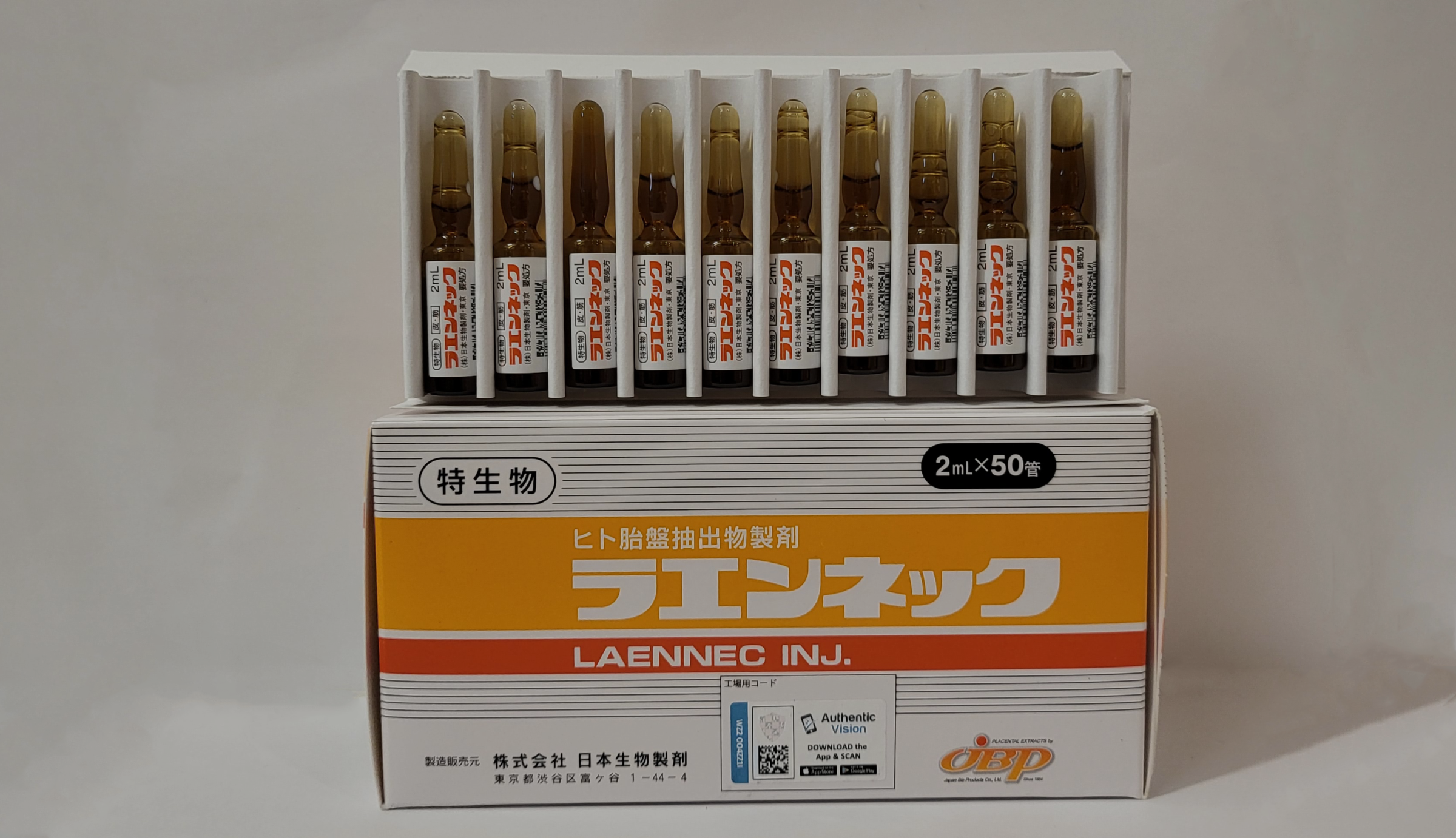
At our clinic, we offer placenta injections using Laennec, a pharmaceutical-grade human placental extract approved by Japan’s Ministry of Health, Labour and Welfare.
Please note that placenta injections at our clinic are not covered by health insurance and are provided as a self-funded treatment.
Price List
-
- Placenta Extract
A physiologically active substance extracted from the human placenta that activates cells throughout the body. - ¥1,900(¥2,090 incl. tax)
- Placenta Extract
-
- Placenta Extract(Double Dose)
Our Double dose. We recommend taking this shot once a week for an anti-aging effect. - ¥2,400(¥2,640 incl. tax)
- Placenta Extract(Double Dose)
-
- Placenta Extract(Triple Dose)
Our triple dose plan, for a maximum anti-aging effect. - ¥2,900(¥3,190 incl. tax)
- Placenta Extract(Triple Dose)
-
-
Pure Placenta
Oral placenta supplements are now available. Please use them to supplement your placenta intake on days when you do not receive an injection. -
10 capsules
(1 blister pack)
¥2,900 (¥3,130 incl. tax) -
100 capsules
(1 box)
¥24,000 (¥25,920 incl. tax)
-
Pure Placenta
Side Effects
The main side effects are listed below. As this product contains proteins, amino acids, and other substances derived from human tissue, it may cause hypersensitivity reactions. If you experience any of these symptoms after receiving Laennec, or if you have any concerns, please consult a doctor or nurse.
Main Side Effects
Pain or hardening at the injection site
Rash, fever, or itching
Gynecomastia
• Safety Regarding Viruses and Bacteria
As this product contains human-derived ingredients, the risk of infectious disease transmission cannot be completely ruled out. However, strict screening for infectious diseases is conducted during the manufacturing process. Only placentas confirmed to be negative for hepatitis B virus (HBV), hepatitis C virus (HCV), human immunodeficiency virus (HIV), and the agent associated with variant Creutzfeldt–Jakob disease (vCJD) are used as source material. High-pressure steam sterilization is also performed to prevent viral and bacterial infections. No cases of infectious disease transmission have been reported since the product was first marketed in 1974.
• Blood and Organ Donation
Because the theoretical risk of transmitting infectious diseases cannot be completely ruled out, individuals who have received human placenta-derived products, including Laennec, are not permitted to donate blood. As a general rule, they are also asked to refrain from donating organs. However, organ donation may be permitted if the intended recipient has received an appropriate explanation from the transplant physician and has clearly expressed their willingness to undergo the transplant.